
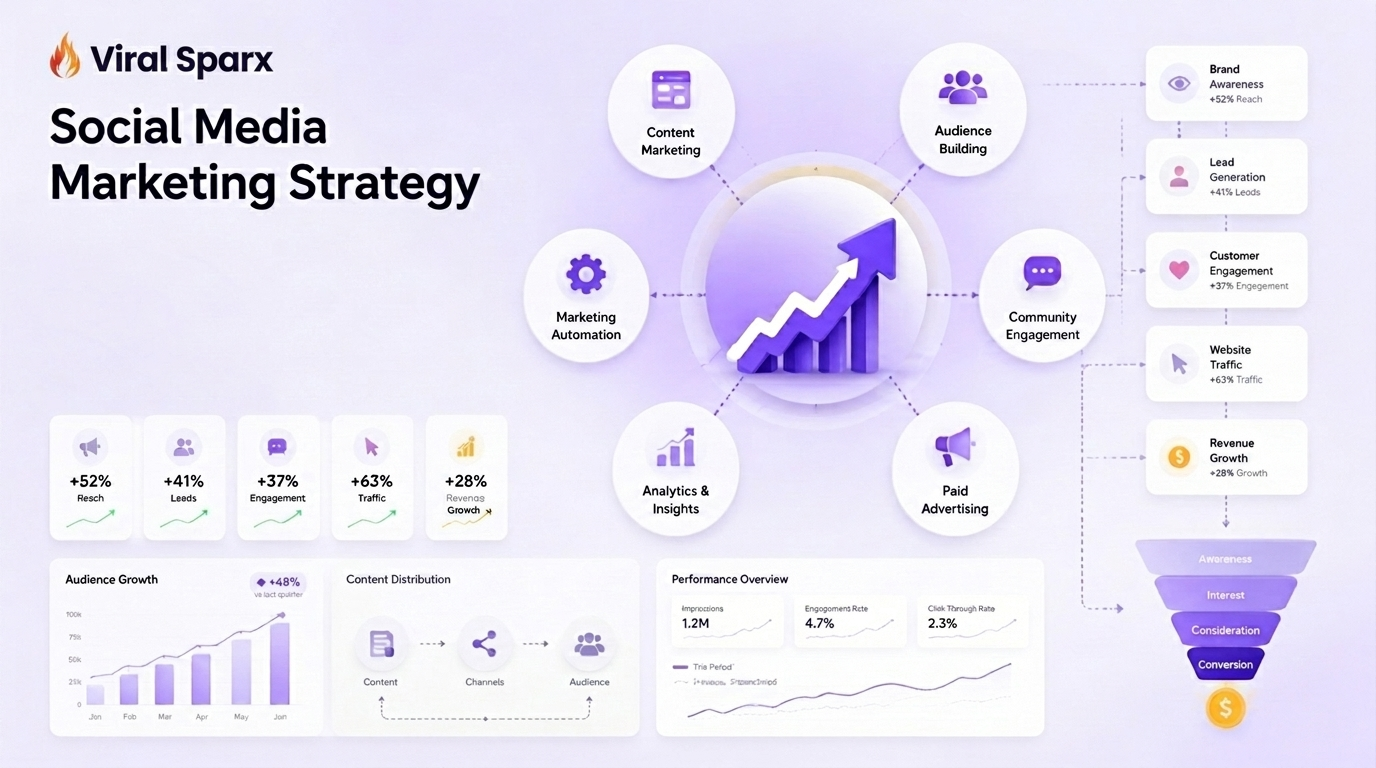
Creating content consistently is one of the biggest challenges businesses face on social media. Many brands post regularly but struggle to generate engagement, reach new audiences, or achieve business goals. The solution is having a well-defined social media content strategy.
A strong content strategy for social media helps businesses create valuable content, maintain consistency, connect with their audience, and support long-term growth. Instead of guessing what to post every day, a clear strategy ensures every piece of content has a purpose.
In this guide, you’ll learn how to create a social media content strategy, develop engaging content, organize your content calendar, and improve your overall social media performance in 2026.
What is a Social Media Content Strategy?
A social media content strategy is a structured plan that outlines what content your business will create, when it will be published, who it is intended for, and how it supports your business goals.
Your strategy should include:
- Content objectives
- Target audience
- Content themes
- Platform selection
- Posting frequency
- Content calendar
- Performance measurement
A successful strategy ensures that every post contributes to audience growth, engagement, and brand awareness.
Why is Social Media Content Strategy Important?
Without proper planning, businesses often face:
- Inconsistent posting
- Low engagement rates
- Weak brand messaging
- Limited audience growth
- Difficulty measuring results
A well-planned social media content strategy helps businesses:
- Build brand authority
- Increase engagement
- Improve content consistency
- Strengthen customer relationships
- Generate website traffic
- Support business growth
When combined with a broader social media marketing strategy, content becomes a powerful growth driver.
How to Create a Social Media Content Strategy
1. Define Your Content Goals
Every content strategy should start with clear objectives.
Common content goals include:
- Increasing brand awareness
- Growing followers
- Improving engagement
- Driving website traffic
- Generating leads
- Building community trust
For example:
- Increase Instagram engagement by 25% over six months.
- Drive 1,000 monthly visitors from social media to your website.
Having measurable goals makes it easier to evaluate performance and improve future content.
2. Understand Your Target Audience
Creating content without understanding your audience often leads to poor results.
Ask questions such as:
- Who are your ideal customers?
- What challenges do they face?
- What type of content do they consume?
- Which social media platforms do they prefer?
Audience research helps create content that addresses real interests and encourages interaction.
3. Choose the Right Content Pillars
Content pillars are the main topics your brand consistently discusses.
Popular content pillars include:
Educational Content
Provide useful information, tips, and industry insights.
Examples:
- How-to guides
- Tutorials
- Industry trends
- Expert advice
Entertaining Content
Keep your audience interested and engaged.
Examples:
- Reels
- Short videos
- Memes
- Behind-the-scenes content
Using trending audio can significantly improve visibility. Check out our guide on Trending Instagram Audio Guide: Find Viral Reel Sounds in 2026.
Inspirational Content
Build trust and motivation.
Examples:
- Success stories
- Customer achievements
- Brand milestones
Promotional Content
Showcase products and services without overwhelming followers.
Examples:
- Product highlights
- Service benefits
- Special offers
- Customer testimonials
A balanced mix of content creates a more engaging social media presence.
4. Build a Social Media Content Calendar
A social media content calendar is one of the most important content planning tools.
It helps businesses:
- Stay organized
- Maintain consistency
- Avoid last-minute posting
- Balance content types
Your content calendar should include:
- Publishing dates
- Platforms
- Post formats
- Captions
- Visual assets
- Campaign details
For a detailed planning framework, read our Social Media Plan Guide.
5. Create Platform-Specific Content
Every social media platform serves a different purpose.
Focus on:
- Reels
- Stories
- Carousels
- User-generated content
Focus on:
- Community engagement
- Videos
- Educational posts
- Group discussions
Focus on:
- Industry insights
- Thought leadership
- Professional updates
Focus on:
- Visual content
- Guides
- Product discovery
You can learn more through our guide on How to Use Pinterest for Business Growth in 2026.
X (Twitter)
Focus on:
- Conversations
- Industry discussions
- Community engagement
Businesses can also use Twitter Communities to connect with highly targeted audiences.
6. Develop a Consistent Content Creation Strategy
Consistency is one of the most important ranking and engagement factors on social media.
A strong content creation strategy should include:
- Weekly content planning
- Content batching
- Graphic creation
- Video production
- Caption writing
- Content review processes
Creating content in advance reduces stress and improves quality.
7. Focus on Engaging Social Media Content
Engagement signals help increase content visibility.
Ways to create engaging social media content include:
Ask Questions
Encourage conversations by asking your audience for opinions and experiences.
Use Polls
Interactive polls generate quick engagement and audience insights.
Share User Content
Featuring customer content builds trust and community.
Tell Stories
People connect with stories more than promotional messages.
Use Video Content
Short-form videos continue to dominate social media engagement in 2026.
8. Strengthen Your Brand Identity
A successful social media content strategy for brands should reinforce brand identity.
Maintain consistency in:
- Brand colors
- Typography
- Visual design
- Tone of voice
- Messaging style
This helps audiences recognize your content instantly.
For additional insights, explore our guide on Top Social Media Branding Strategies.
9. Build a Community Around Your Content
Content performs better when it encourages participation.
Businesses can build stronger communities by:
- Responding to comments
- Highlighting customer stories
- Hosting discussions
- Creating exclusive groups
- Encouraging user-generated content
Community-focused strategies often result in stronger loyalty and higher engagement.
Learn more in our guide on Build a Powerful Brand Community.
Social Media Content Strategy Examples
Example 1: Service-Based Business
Content Mix:
- 40% Educational
- 30% Case studies
- 20% Community content
- 10% Promotional content
Example 2: Ecommerce Brand
Content Mix:
- Product demonstrations
- Customer reviews
- Lifestyle content
- Educational tips
- Seasonal campaigns
Example 3: Personal Brand
Content Mix:
- Industry insights
- Personal experiences
- Thought leadership
- Community discussions
These social media content strategy examples demonstrate how content can be tailored to different business models.
Best Social Media Content Strategy Tips for 2026
Follow these proven practices:
- Prioritize quality over quantity.
- Create audience-focused content.
- Use short-form video consistently.
- Repurpose top-performing posts.
- Follow a structured content calendar.
- Track performance metrics regularly.
- Encourage audience participation.
- Maintain brand consistency.
- Test different content formats.
- Review analytics monthly.
For additional guidance, visit our Social Media Management Tips resource.
Common Content Strategy Mistakes
Avoid these common mistakes:
- Posting without a plan
- Publishing only promotional content
- Ignoring audience feedback
- Inconsistent branding
- Neglecting analytics
- Using the same content on every platform without adaptation
Small improvements in these areas can produce significant long-term results.
Measuring Content Performance
Track these key metrics:
Reach
The number of users who see your content.
Engagement Rate
Likes, comments, shares, saves, and clicks.
Follower Growth
How quickly your audience is expanding.
Website Traffic
Visitors coming from social media platforms.
Conversions
Leads, sign-ups, or sales generated from content.
Data-driven decisions help improve future content planning and performance.
Conclusion
A successful social media content strategy is more than simply posting regularly. It requires audience research, content planning, consistent branding, engagement tactics, and ongoing performance analysis.
Businesses that invest in strategic content creation are better positioned to build stronger communities, increase visibility, and achieve sustainable growth in 2026.
Start by defining clear goals, building a content calendar, creating valuable content, and continuously improving your strategy based on audience feedback and analytics.
Frequently Asked Questions
What is a social media content strategy?
A social media content strategy is a plan that outlines what content a business will create, when it will publish it, and how it supports business goals.
How do I create a social media content strategy?
Start by identifying goals, understanding your audience, choosing content pillars, building a content calendar, and tracking performance metrics.
Why is social media content planning important?
Content planning improves consistency, increases efficiency, and helps align content with marketing objectives.
What is a social media content calendar?
A social media content calendar is a schedule that organizes upcoming content, publishing dates, platforms, and campaign activities.
What makes engaging social media content?
Content that educates, entertains, inspires, or encourages audience participation typically generates higher engagement.